
In front of a packed chamber of Arab leaders last May, President Trump declared that the era of American-led regime change was over.

“In the end, the so-called nation builders wrecked far more nations than they built,” he said in Riyadh, deriding the “Western interventionalists giving you lectures on how to live and how to govern your own affairs.”
Nine months later, he launched the largest U.S. military operation the region had seen in two decades and urged Iranians to “take over” their government, backed by U.S. force. The military said Sunday that three American troops were killed in the operation, and five others seriously wounded.
It marked a jarring reversal for a man whose political rise was fueled in part by American fatigue with large-scale military interventions. For years, Trump denounced Washington’s “forever wars” and warned against toppling foreign regimes by force, a message that formed the foundation of the “America First” movement that won him the presidency twice.
Trump’s decision to launch Operation Epic Fury was driven by frustration that Iran wouldn’t cut a deal to constrain its nuclear program, his longtime personal grievances against Tehran, and a new conviction among the president and his top advisers after January’s operation in Venezuela that regime change didn’t have to mean another Iraq, according to administration officials and others familiar with Trump’s thinking.
It was also shaped by Trump’s desire to achieve in Iran what no U.S. president had in almost 50 years. For months, allies from Prime Minister Benjamin Netanyahu to Republican lawmakers told Trump that the Iranian government was the weakest it had ever been, and urged him to seize a once-in-a-generation opportunity to decapitate the regime, the people said. The joint military mission with Israel killed Iran’s supreme leader, Ayatollah Ali Khamenei, and many of his top officials on Saturday.
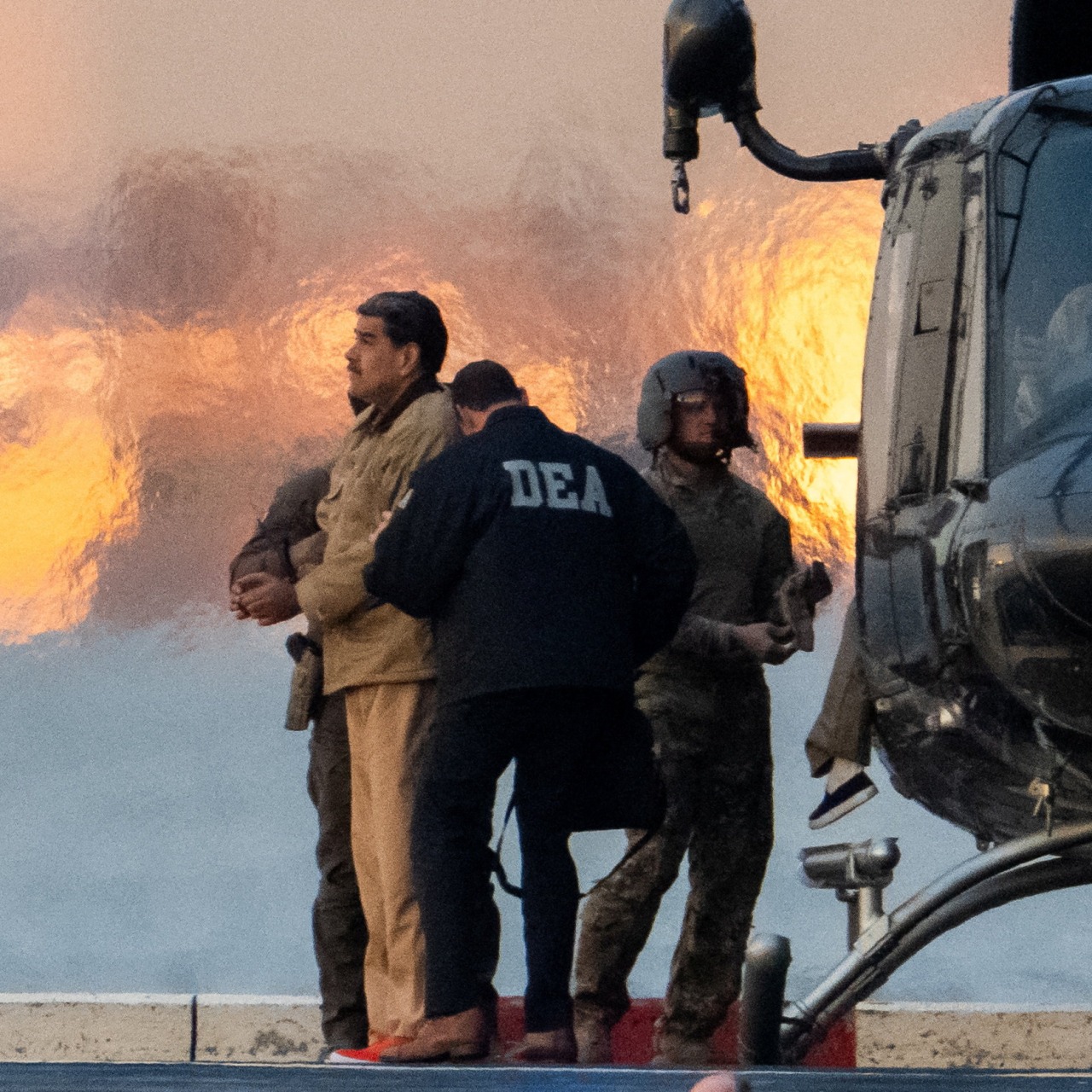
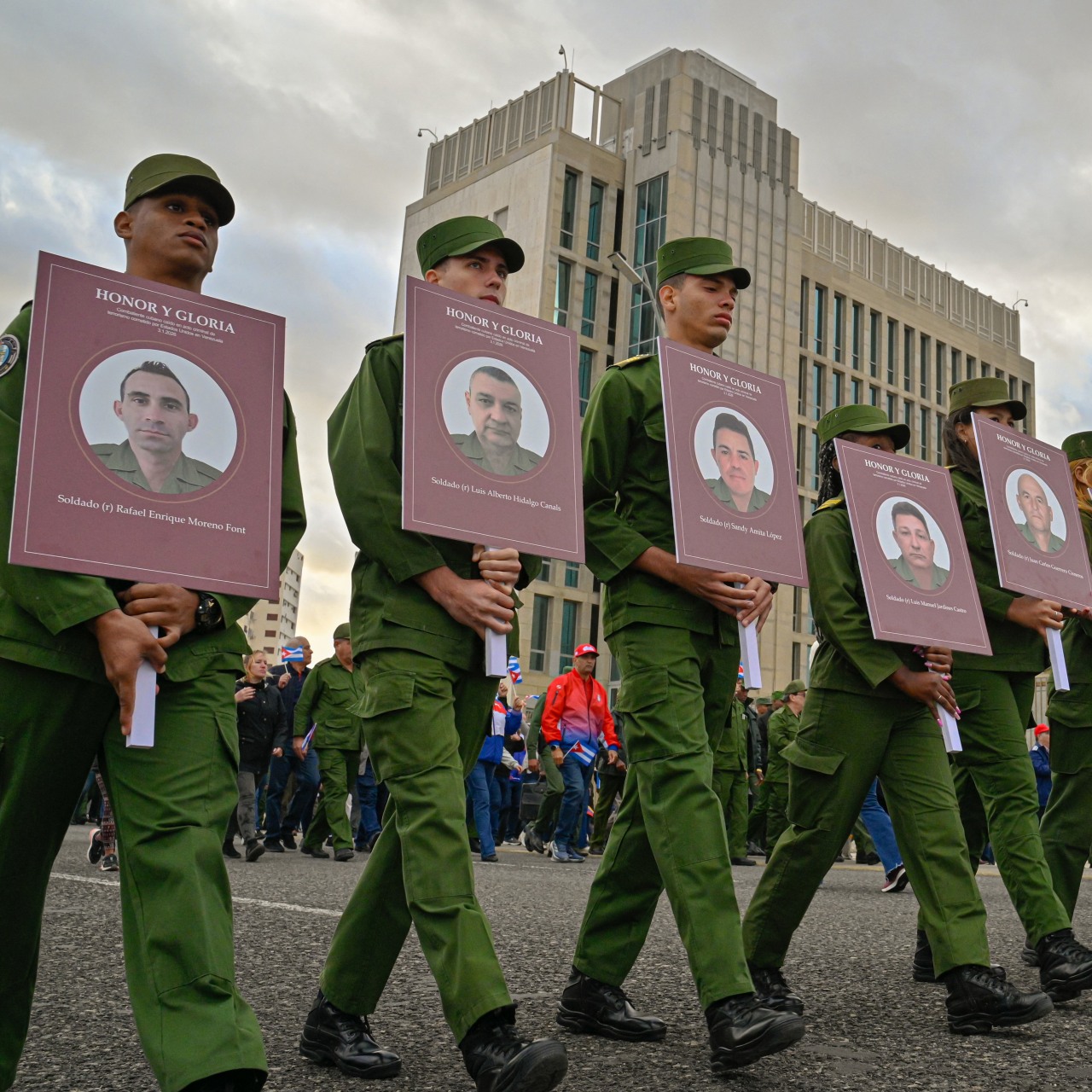
Buoyed by what he viewed as the success of the U.S. operation that deposed Venezuelan strongman Nicolás Maduro, Trump came to believe that he had found a new playbook—one that could bring down a hostile leader, extract concessions and leave the transition to its people without committing to an open-ended U.S. involvement. It’s a blueprint Trump and some of his advisers have discussed using in Cuba, in hopes of toppling a regime they have recently designated as an “unusual and extraordinary threat” to U.S. national security.
It’s a risky gambit. In Venezuela, the U.S. captured Maduro but didn’t call on the country to take over the government, instead working with government insiders and promising an eventual transition. In Iran, the killing of Khamenei and many in his inner circle risks triggering a wider regional conflict that could destabilize the country and mire the U.S. in another war in the Middle East.
It’s also one constrained by hard logistics. The U.S. military is burning through scarce air-defense interceptors faster than it can replace them, raising concerns about how long it can sustain this tempo while continuing to protect U.S. forces and partners from retaliation.
John Bolton, Trump’s former national security adviser, spent years trying to push the president toward regime change in Iran. But Trump ousted Bolton amid disagreements over foreign policy, and later dismissed him as a war hawk. “[I]f I listened to him,” Trump wrote on social media in 2020, “we would be in World War Six by now.”
Bolton said Saturday’s strikes left him stunned. “I’m as surprised as anybody,” he said.
The operation to decapitate the government of a country of roughly 92 million people is unlikely to give Trump the “one and done kind of approach” he prefers, Bolton said. Trump wants to say “it’s been a success, total victory, and now I leave it up to the opposition to finish the overthrow of the government,” he said.
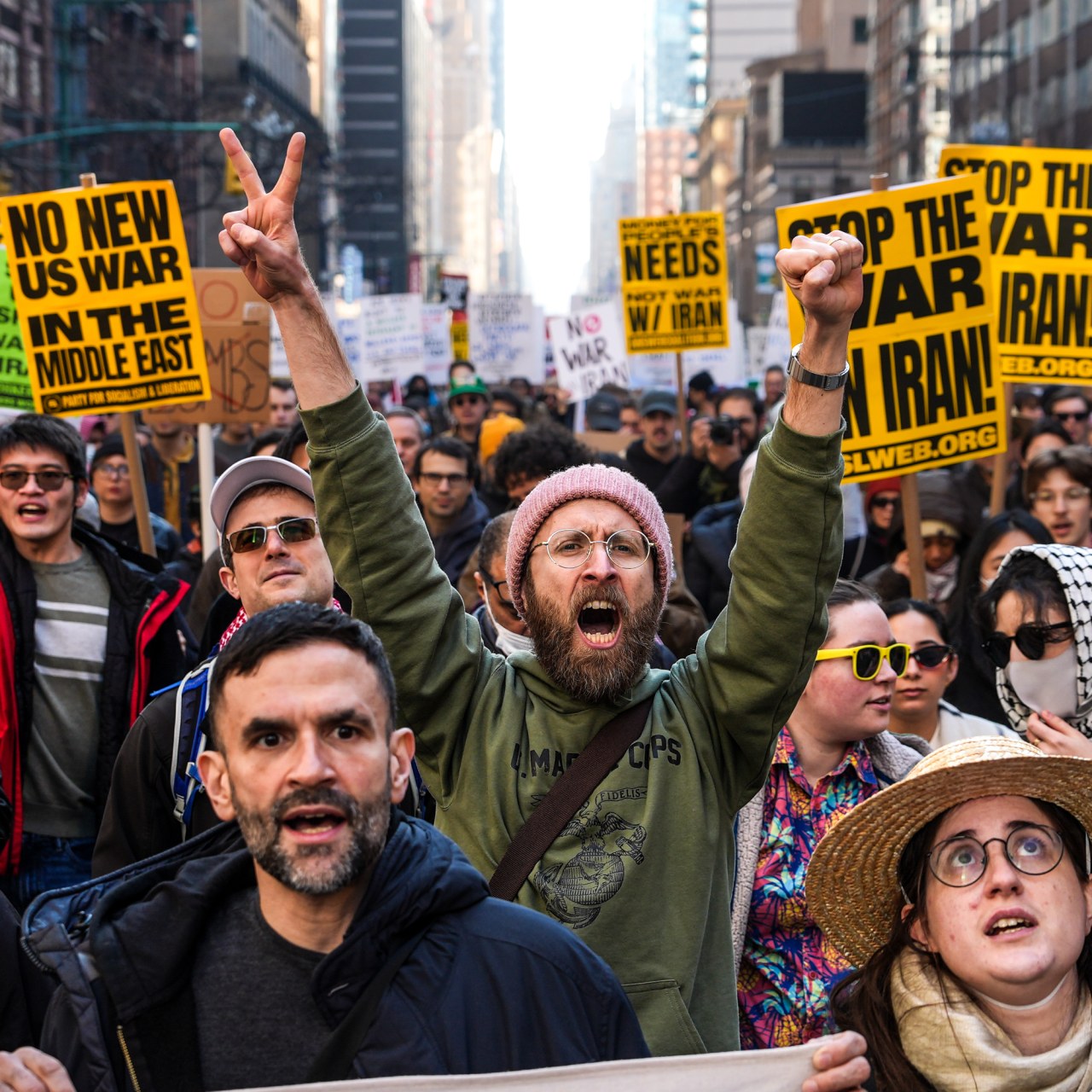
Trump’s most dramatic foreign intervention yet also comes as polls show that voters are souring on his focus on foreign policy months before the 2026 midterm elections. In a recent Wall Street Journal poll, voters disapprove of Trump’s priorities by an 11-point margin, with 53% saying that he is choosing to engage in unnecessary foreign affairs instead of the economy, compared with 42% who say he is dealing with urgent national security threats.
But Trump has shown little sign of retreating from foreign confrontations. In recent months, Trump has increasingly become convinced he can use an overwhelming display of U.S. power to force out three of Washington’s most entrenched adversaries in a single term—Venezuela, Cuba and Iran.
After the operation that took out Maduro, he basked in the praise of conservative media and prominent allies who hailed him as a “liberator,” according to people involved in White House discussions. He took it as proof that force, used decisively, could succeed where decades of diplomacy had failed.
“Trump wants to be viewed as a significant historical figure,” said Elliott Abrams, who served as Trump’s envoy to Iran and Venezuela in his first term. “If he can change the government of Cuba, that’s something that John F. Kennedy couldn’t do. And everything changes in the Middle East if the Islamic Republic that we’ve known since 1979 is removed one way or another.”
But by launching a sustained operation for regime change in Iran, Trump broke his longstanding “over and done” rule, according to Abrams, who said the president had previously only wanted to use force when he could declare the operation to be over by the time he announced it publicly.
Upon announcing the death of Khamenei, Trump left an open time frame on “heavy and pinpoint bombing” that he said will continue “as long as necessary” to achieve peace in the Middle East.
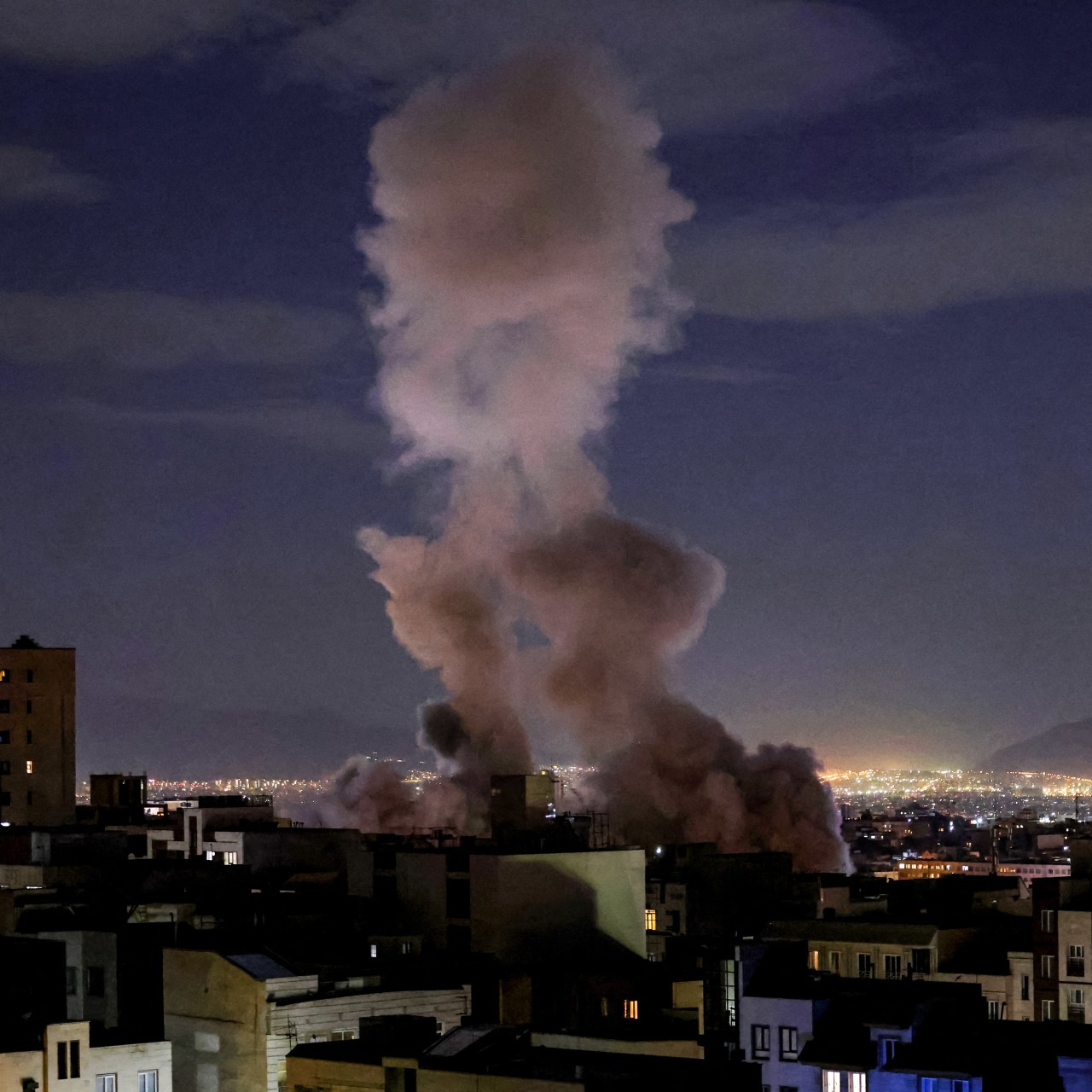
The military operation in Iran could take several weeks, U.S. officials said.
Freed from the constraints of a re-election campaign and more familiar with the levers of military power, Trump has been more willing to deploy force in his second term, counting on his base to stand by him as long as he avoids committing U.S. boots to a ground war, according to current and former officials.
It’s also personal. Trump’s worldview was shaped by the 1979 Iran hostage crisis, which he invoked on Saturday when justifying the strikes. He has faced death threats and assassination plots from Tehran. And as the operation was unfolding, he posted on social media a link to an article accusing Iran of interfering in the 2020 and 2024 elections to stop Trump.
Trump had similarly shared unproven allegations that Maduro had meddled in the 2020 U.S. election before deciding to capture him and send him to the U.S. to face narco-trafficking charges.
In his second term, Trump has cast himself as the “president of peace”—a new identity that aides say he has come to see as central to his legacy. He has framed the Iran operation as the culmination of that mission, saying it would eradicate a murderous regime that has “soaked the earth with blood and guts” across the region and threatened Americans for decades.
“President Trump is taking decisive action to eliminate major national security threats to the American people, which past Presidents have talked about for 47 years, but only this President had the courage to accomplish,” a White House spokeswoman said in a statement.
The president had favored a diplomatic solution. “Trump laid out America’s red lines, kept the door open, and gave them a real chance—and Iran’s stall-and-smokescreen playbook just doesn’t work on him,” said Brian Hook, Trump’s former State Department Iran envoy.
Some of Trump’s own top advisers have previously said they had no clear answer for what would come next.
“No one knows who would take over,” Secretary of State Marco Rubio told lawmakers in January when asked who would fill the void, describing power in Iran as fractured among Khamenei, the Islamic Revolutionary Guard Corps (IRGC), and quasi-elected officials who are ultimately subordinate to the supreme leader.
Rubio said at the time that if Khamenei were to fall, the best Washington could hope for was that someone within the existing system would work with the U.S. toward a transition—a process he warned would be “far more complex” than Venezuela.
The Central Intelligence Agency in recent weeks assessed that Khamenei’s death as a result of U.S. military operations could lead to several different scenarios, including hard-liners from the country’s IRGC or another faction in the country taking power, according to people familiar with the matter.
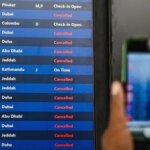
Trump’s critics argue that his decision to attack Iran undercut his contention that he is the president of peace. The operation has killed scores of civilians, including more than 140 deaths in a strike on an Iranian school, according to Iranian authorities, and triggered retaliation from Tehran that has jolted the entire region.
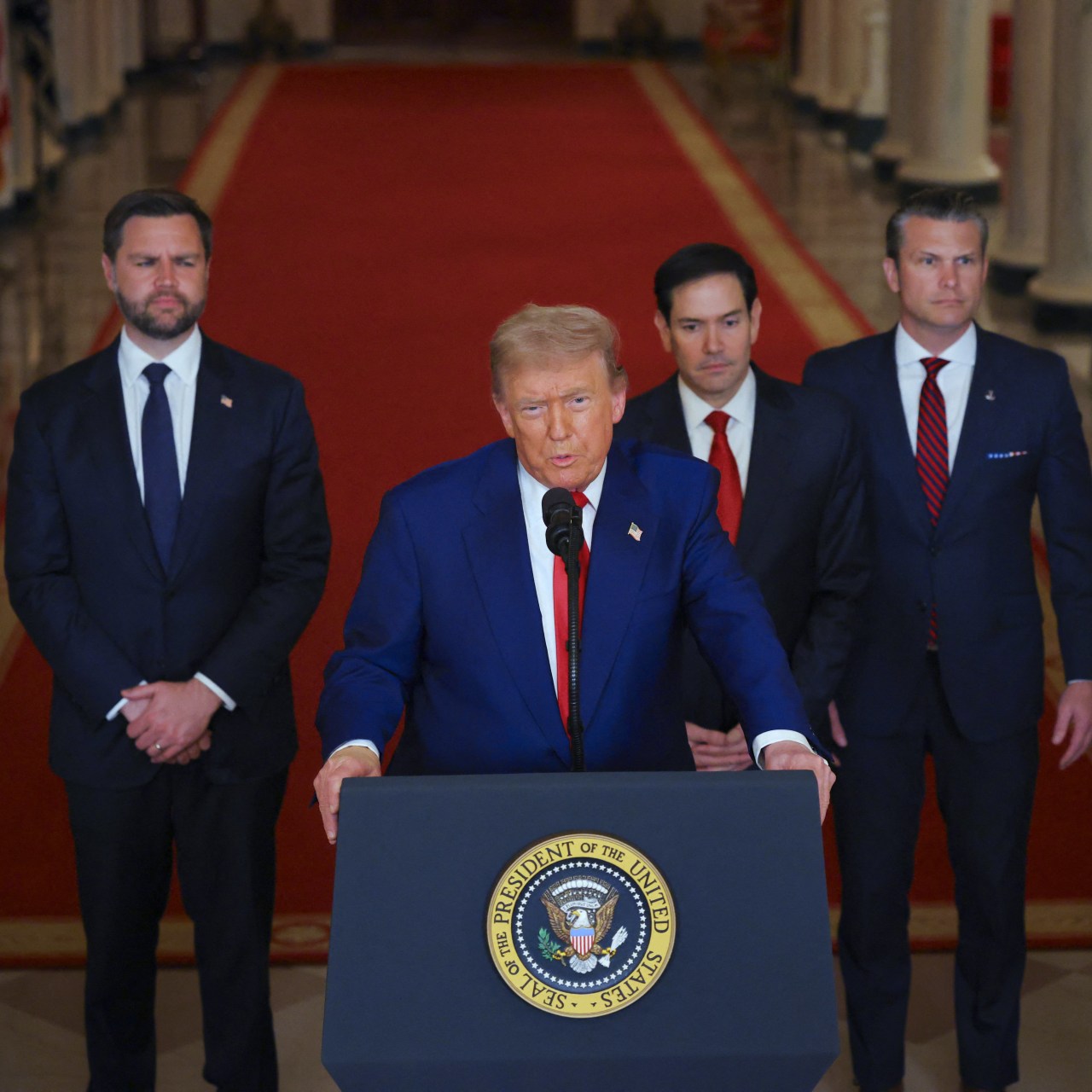
Trump has warned that Americans will be killed as a result of this operation. “Sadly, there will likely be more before it ends,” he said on Sunday, after U.S. Central Command announced that three servicemembers had died. “That’s the way it is.”
That mission will be a test of Trump’s grip on a Republican Party fractured over America’s involvement abroad. His own cabinet is filled with senior officials—including JD Vance, Pete Hegseth and Tulsi Gabbard—who served in the post-9/11 wars in the Middle East and built their political brand on skepticism of the kind of foreign intervention now unfolding in Iran.
“The War Department will not be distracted by democracy-building, interventionism, undefined wars, regime change, climate change, woke moralizing and feckless nation building,” Hegseth said during a keynote address at the Reagan Defense Forum in December.
Trump’s decision sparked immediate criticism from influential voices in the MAGA movement and a few GOP lawmakers who demanded the president outline a clear objective and seek congressional approval.
Sen. Rand Paul (R., Ky.), who voted with Democrats in January to advance a war-powers resolution to block Trump from taking further military action in Venezuela, posted on X Saturday: “My oath of office is to the Constitution, so with studied care, I must oppose another Presidential war.”
In the early 2010s, Trump repeatedly predicted that then-President Barack Obama would launch a war to project strength and rally Americans behind him, saying in 2013 Obama would “someday attack Iran in order to show how tough he is.” His 2016 presidential campaign based itself on opposition to the foreign policy establishment. Trump harshly criticized the war in Iraq, calling it one of the worst decisions in presidential history.
“The current strategy of toppling regimes with no plan for what to do the day after only produces power vacuums that are filled simply by terrorists,” he said at a rally in Philadelphia two months before the 2016 election. “We will abandon the policy of reckless regime change favored by my opponent.”
In his first term, Trump pursued maximum pressure on Iran and talked openly about toppling Maduro, but he repeatedly stopped short of pulling the trigger. “We’re not looking for regime change,” he said about Iran in 2019. “I just want to make that clear.”
When he endorsed Trump in 2023, Vance wrote an op-ed in the Journal with the headline, “Trump’s Best Foreign Policy? Not Starting Any Wars.” He wrote, “Not starting wars is perhaps a low bar, but that’s a reflection of the hawkishness of Mr. Trump’s predecessors and the foreign-policy establishment they slavishly followed.”
This week Vance, a former Marine who deployed to Iraq, told the Washington Post ahead of the strikes he still sees himself—and Trump—as a “skeptic of foreign military interventions.” He promised that any mission in Iran would be “very clearly defined,” like the capture of Maduro. “The idea that we’re going to be in a Middle Eastern war for years with no end in sight—there is no chance that will happen,” Vance said.
Despite the hand-wringing from the foreign policy establishment, some hard-liners in Washington see the extraordinary operations in Venezuela and Iran as a new model for asserting American power: swift, aggressive operations without the open-ended occupations that defined the post-9/11 era.
“Everybody’s allergic to the term regime change because of what happened in Iraq,” said Rep. Carlos Giménez (R., Fla.), arguing it should no longer be taboo—and that Cuba will be next.
“The journey starts with the collapse of this regime,” Giménez said. “I don’t think anybody has all the answers. But that’s no excuse not to begin the journey.”