

British music producer Alex Grant was living in an under-construction mega-mansion in Los Angeles when, one morning shortly after 9 a.m., an armed intruder burst into the home.

“He came in and we had a tussle,” recalled Grant, formerly known as Alex Da Kid. Grant managed to call his manager, who phoned the police. Soon, officers and helicopters were on the scene.
He briefly considered abandoning the project after the 2017 break-in but ultimately finished the 24,000-square-foot home, which has eight pools, a car elevator and a nightclub. But, he doubled down on security features, installing a guard house, tall gates and a security system with retina scanners that alert the homeowner to movement in the home. “Later, I found out he had these knives on him,” said Grant, who recently listed the mansion and a neighboring house for $85 million after moving to New York.
In an era of high-profile violence—including the suspected abduction of Savannah Guthrie’s mother from her Arizona home just over a week ago—the wealthy are investing heavily in their personal security, particularly when it comes to their homes.
Security measures once reserved for presidents and royalty—safe rooms, biometric access controls, laser-powered perimeter defenses—are now mainstream items in luxury homes. Executive-protection teams and armed guards patrol gated enclaves and suburban estates, while tech startups are rolling out predictive threat-detection systems built for the ultra-wealthy. The shift reflects a hardening view among the affluent: Traditional policing and communal safety are no longer enough, so security is being privatized, customized.
This new emphasis is reflected in sales data. Roughly 45% of luxury homes sold in 2025 included a reference to privacy or security, according to Coldwell Banker Realty, up from 38% in 2024.
Why the wealthy are on edge
Break-ins at the homes of celebrities and professional athletes have been putting the wealthy on edge. A group of Chilean nationals was indicted last year for stealing items worth more than $2 million from sports stars including Kansas City Chief players Travis Kelce and Patrick Mahomes.
The break-ins, which took place when the players were not home, put fellow athletes on notice. Miami Dolphins player Tua Tagovailoa said he hired personal security to monitor his house when he’s on the road. “Let that be known, they are armed, so I hope if you decide to go to my house you think twice,” he said at a December 2024 press conference. The homes of celebrities like Brad Pitt and Nicole Kidman have also been broken into.
Miami real-estate agent Danny Hertzberg of Coldwell Banker Realty said he began noticing an increased emphasis on security in 2020, when high-profile executives were migrating from New York to Miami during the early days of the Covid pandemic, but it’s ramped up ever more since the ambush killing of UnitedHealthcare CEO Brian Thompson on a Manhattan sidewalk in 2024 and the shooting of Blackstone executive Wesley LePatner and several others in July 2025 at a Park Avenue office tower.
The sheer volume of personal information now available online has heightened anxiety among the wealthy. And the ubiquity of social media has stripped away a layer of anonymity the wealthy once relied on. “Prior to the wide use of social media, most CEOs—whether they’re in private equity, finance or tech—no one knew their names or what they looked like, with few exceptions,” Hertzberg said. “Now, people are tracking them.”
Private jet tracking websites—which allow anyone to monitor private aircraft movements in real time—in particular have “sent chills through the high-net worth community,” he said. Corporations are taking note. Companies offering personal security benefits for CEOs increased by 10% in 2025 compared to 2023, according to a Goldman Sachs Ayco survey. And 27% of respondents offered home security benefits to CEOs, the highest level since 2003.
Building the modern fortress
One entrepreneur capitalizing on this growing demand is David Widerhorn, who got into real estate after selling a tech company in 2017. Widerhorn, 38, recently built an heavily-secured home in Scottsdale, Ariz., that he is trying to sell for $15 million.
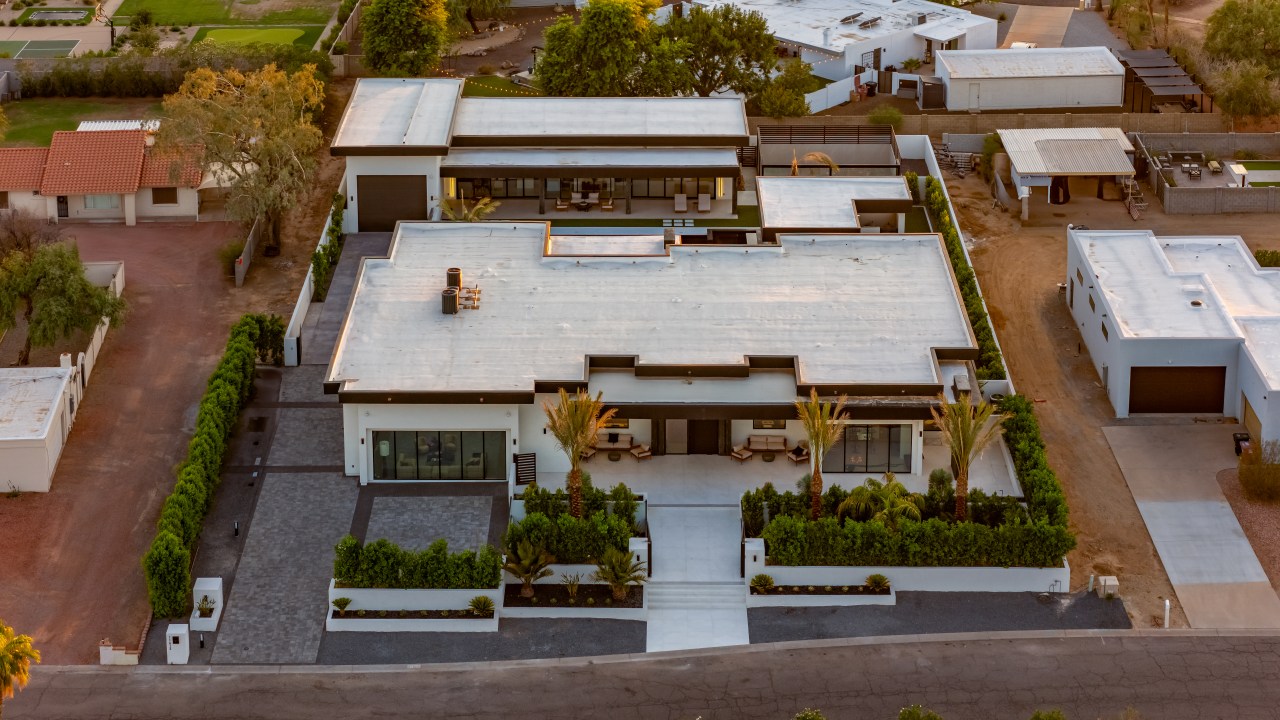
In early December, Widerhorn walked through the roughly 8,600-square-foot house, pointing out 32 casino-grade cameras with AI-powered facial and vehicle recognition capabilities. There is also a laser intrusion detection system around the perimeter.
Pausing at a steel double gate in front of the house, he warned that the security system kicks in even before visitors reach the front door, which is fashioned out of three-inch thick solid steel and has 13 deadbolts. Widerhorn said even the landscaping was designed to be a deterrent: There are sour orange trees with four-inch spikes in concrete planters on the edge of the property; just beyond those trees, separating the house and street, is a moat.
“If you try to run through that bush, it will be a bad day for you,” Widerhorn said. Should anyone get past the trees, lasers will detect motion and the system will call the police. Inside the house, three ear-piercing alarms will go off and a fireplace surround in the great room—which is made out of cristallo quartzite and can change color—turns red.
The home’s most fortified feature lies hidden behind a wood-paneled wall: a reinforced concrete safe room with a 2,000-pound door and an air filtration system built to U.S. Army Corps of Engineers standards.
Widerhorn declined to share specifics but said it cost more than $10 million to build the house. About $1 million was spent on bullet-resistant smart glass. And the front-entry security features cost more than $1 million.

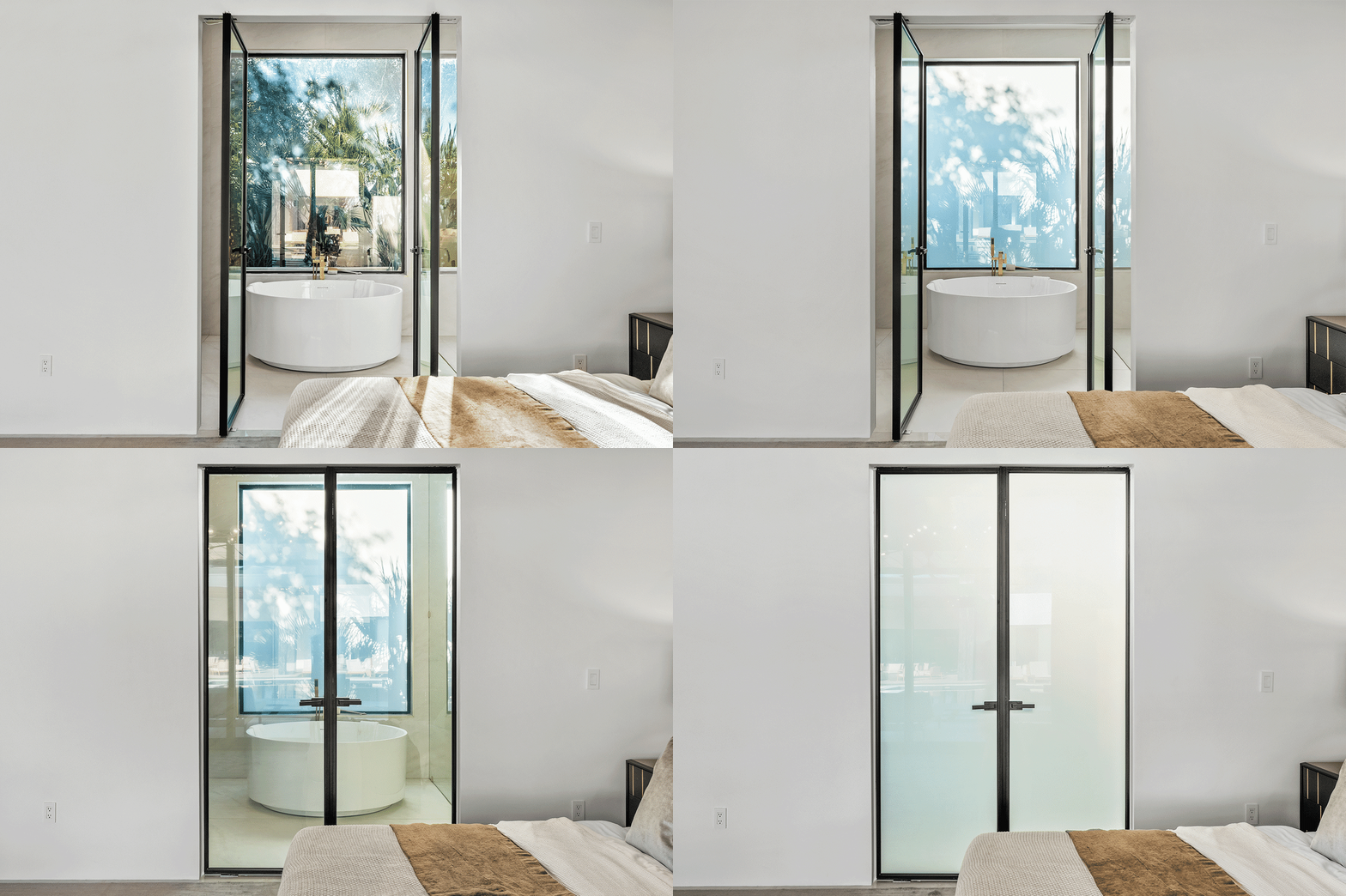
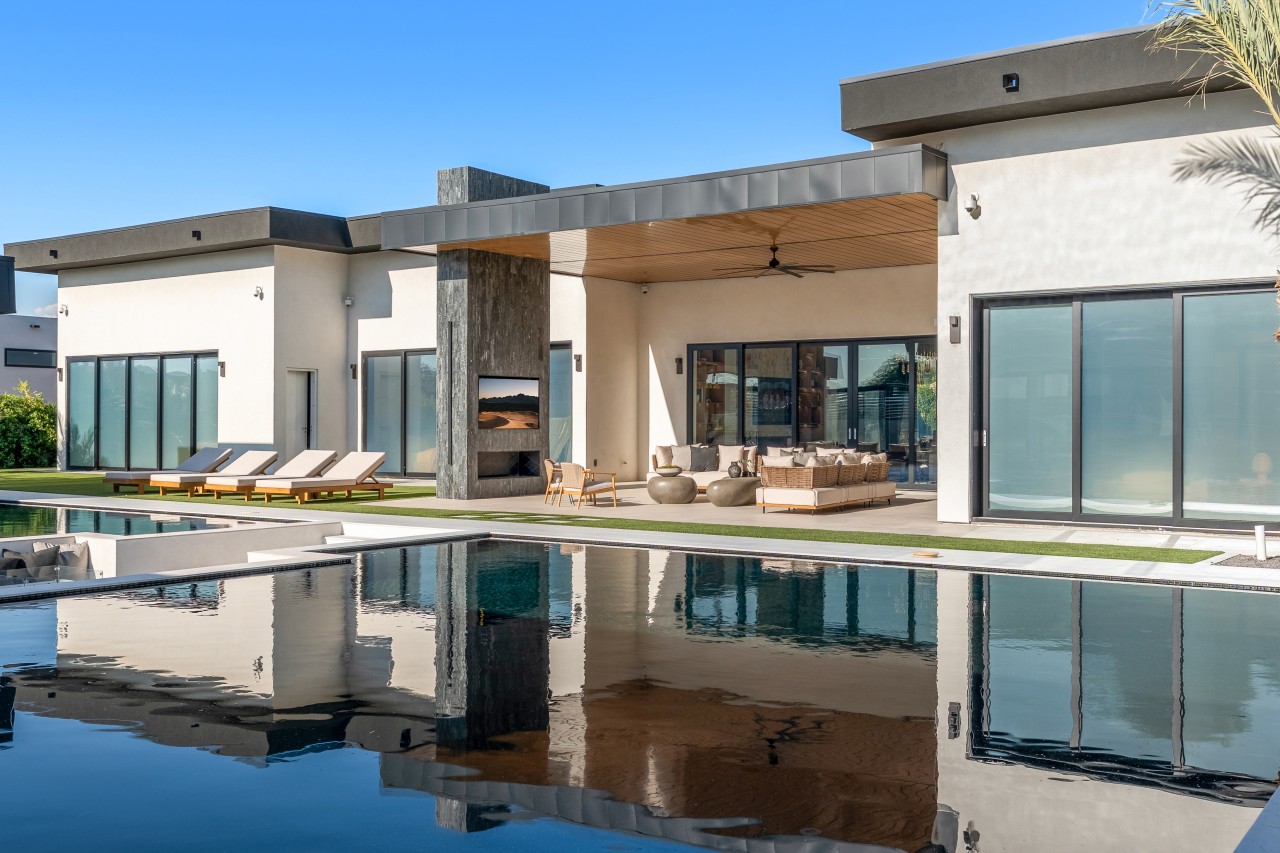
In Las Vegas, clients of luxury design-build firm Blue Heron are spending between $100,000 and $1.5 million on security features, including safe rooms and bunkers, said Andrew Kennedy, director of innovation and strategy. Blue Heron is working on new ways to incorporate architecture with security, such as exterior window shades that could be closed with the touch of a button to protect the home’s occupants.
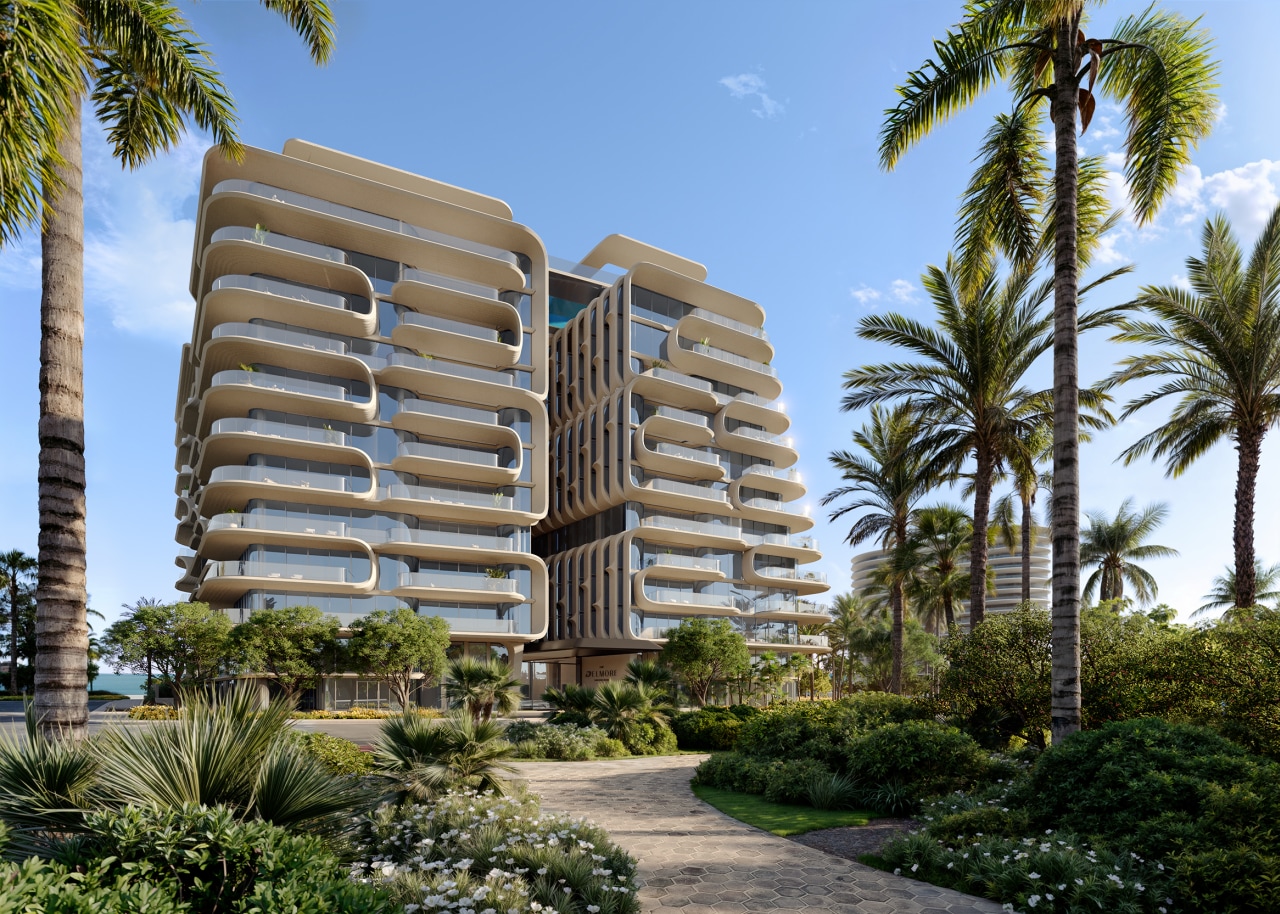
In Surfside, Fla., the developer of the Delmore, a planned 37-unit ultra-high-end condominium project designed by Zaha Hadid Architects and with units priced at up to $200 million, has tapped a Washington D.C.-based security firm to design the building’s security. The firm, Active Security Consulting, was founded by former U.S. Marine Scout Sniper Walter Hasser and has provided specialized protection for the U.S. Department of Defense as well as the current and former Presidents of the United States.
The firm is working to integrate technology like biometric access, facial recognition and iris scanning into the design of the project, Hasser said. For instance, when a resident or visitor pulls into the building’s parking garage, their car will be scanned for license plate recognition, but facial recognition may also identify the car’s occupants and their level of approved access to the building. That, in turn, triggers the security system to allow that person to unlock only the doors and elevators that they are permitted to pass through. Meanwhile, an AI-powered security system will track movements captured on camera throughout the building, looking for anomalies, Hasser said.
Hertzberg said he recently had a client fly in a security consultant to evaluate a roughly $50 million house he had put under contract. The consultant looked into the viability of installing a complex camera and laser system that could sense any movement on the perimeter of the property, including on the water.
Bay Area real-estate agent Steve Mavromihalis of Compass said he has clients with multiple residences, who send security teams ahead to survey their property before they arrive to ensure it is safe. When Mavromihalis shows high-end homes, he assumes everything he says and does is being monitored. “It’s assumed like the sun’s coming up,” he said.
The fortified life
Hertzberg said an increasing number of his clients are gravitating towards gated communities and are asking questions about whether certain neighborhoods have roving security guards and license plate readers. Particularly in demand are island communities like Miami’s Indian Creek because it’s wholly owned by the residents, meaning they don’t have to allow outsiders onto their streets.
Bay Area cities and towns including Palo Alto, Atherton and Woodside already use license plate readers for neighborhood surveillance, as does Las Vegas. Miami has said it will install cameras this summer to combat crime.
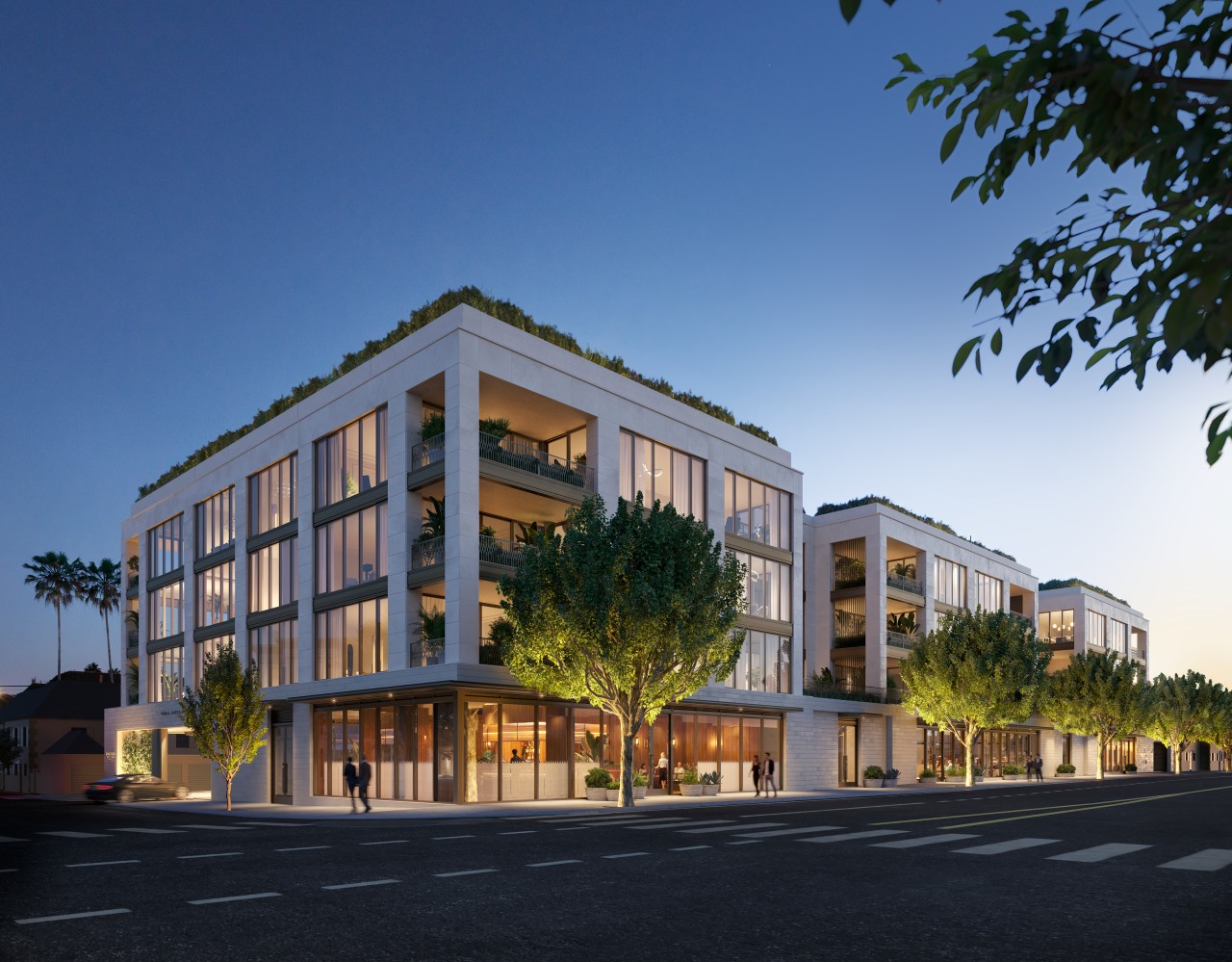
At Rosewood Residences Beverly Hills, developers tapped an outside security firm, Arsec Group, to provide a 24/7 armed guard for the project. High-net-worth Californians are particularly concerned about robberies and burglaries, said Mikey Arana, founder of Arsec, who was formerly an in-house security guard for popstar Justin Bieber. “They’ll be out in Beverly Hills having dinner wearing some jewelry or driving a nice vehicle, then they’ll be followed home,” he said.
Arana said many of his clients previously shied away from arming security guards. Now, they concede it might be necessary. “Sometimes, unfortunately, the only way to stop violent action is with violence response,” he said. The armed security guard patrols the premises with a 9-millimeter pistol strapped to his leg and observes the property via infrared cameras that are dotted around the perimeter of the site.
San Francisco tech entrepreneur Kevin Hartz said he and his high net worth peers in California are increasingly focused on their security. “They’re rethinking how they can be safe in the chaotic, strange world that we’re in today,” he said.
Hartz said he co-founded his own security company, Sauron, in 2024 after being spooked by an attempted break-in at his own home in San Francisco. The person first rang the doorbell, before making his way around the house trying some of the doors and windows. When he couldn’t gain access, he went to Hartz’s next-door neighbor’s home, where he tried to push through the front door. He was arrested by police. “That could have been us,” Hartz said.
The Sauron system, which has only been launched in beta across a few homes in the Bay Area, will differ from other security systems in that it includes deterrence strategies, not only response, said Yvonne McLaughlin, head of client experience at the company. For instance, if it senses an intruder, it could include a feature that automatically triggers sounds, such as dogs barking or police sirens coming closer. Hartz declined to discuss the system’s cost; it’s rumored to be very expensive.
The company sends teams to clients’ homes to take drone footage and photographs and then produces a 3D model to identify security vulnerabilities. It uses Lidar technology—rapid, pulsed laser beams to measure precise distances—and 4K cameras to keep tabs on the property.
Charlie Garcia, founder of R360, a network for centimillionaires, said he and many of his organization’s members also use Global Guardian, a private security and emergency subscription service designed to manage both physical and cyber risk. He said his family is particularly sensitive to security issues because his wife, who is originally from Ecuador, was kidnapped decades ago in a ransom scheme.
“I have a button on my phone. If I touch it, within 45 seconds I get a call from one of their command centers asking me if everything is okay,” he said. A spokesperson for Global Guardian declined to comment on the cost of their services.
During a routine cyber audit conducted by the company, Garcia recently learned that one of his children’s friends had posted a picture to Instagram of the contents of Garcia’s home safe in Fort Lauderdale, which included precious metals.
The family quickly made sure the photo was removed.
Write to Katherine Clarke at Katherine.Clarke@wsj.com and E.B. Solomont at eb.solomont@wsj.com