
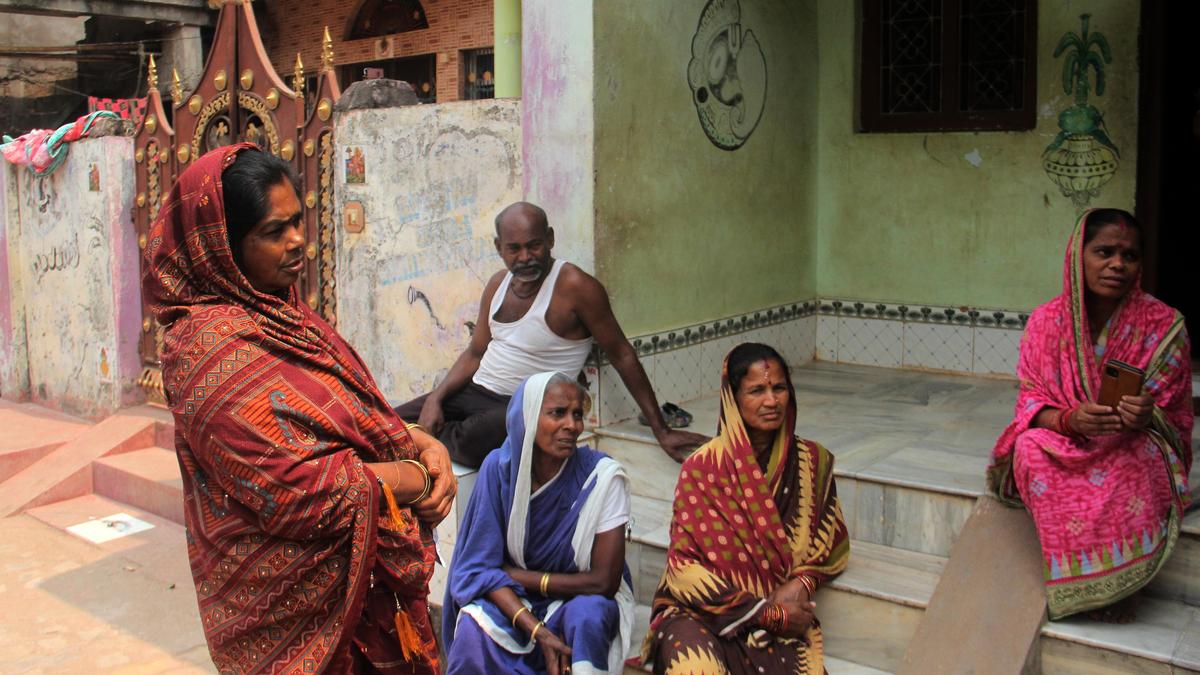
Over the past 10 days, mobile phone screens have been glowing in almost every household of Manikapur village day and night. Mothers plead with their sons to return home; wives urge their husbands to stay safe; and sisters, their voices echoing parental concern, ask their brothers not to chase money in the Gulf at the cost of their lives.
In nearly all of the 750 households of Manikapur village in Ganjam, a southern Odisha district, families have been turning to video calls whenever they feel the need to check on their loved ones since war broke out between Iran and the United States–Israel alliance in the last week of February. Almost every family in Manikapur has at least one member working in the Gulf.
Udayanath Barik, 35, the sarpanch of Manikapur panchayat and himself a veteran of overseas migration, says villagers prefer jobs in Gulf countries because wages are comparatively higher than in India. “As workers gain experience and learn new things, their salaries rise,” he says.
There is no estimate of the number of people from India or Odisha who are stuck as migrants in the war zone.
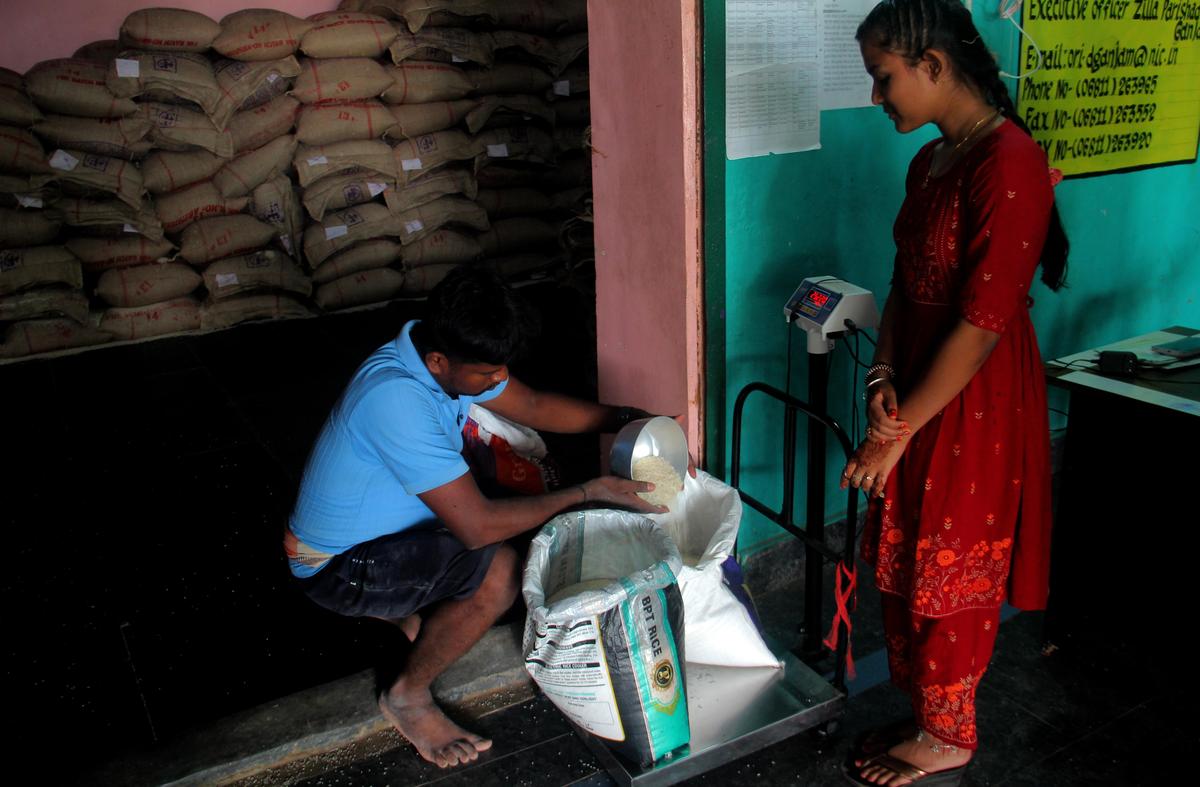
A girl is seen at her panchayat office collecting ration for her family, as her parents are working in the Gulf region at Manikapur in Ganjam district, Odisha.
| Photo Credit:
Biswaranjan Rout
Sons and husbands
Manikapur, barely 5 kilometres off National Highway 16, looks almost like a small town set in a rural landscape. The village’s main road, lined with flashy houses, gives the impression of a prosperous settlement. They are homes built by non-resident migrants chasing their dollar-dreams abroad.
Most of the village’s international migrant workers have studied only up to Class 12. As boys step into their 20s, their aspirations stretch far beyond the village, beyond India itself.
Namita Singh, in her 50s, was never much of a news watcher. Whenever she found time, she flipped through entertainment channels. “Now I cannot afford to miss the news,” she says. “They show updates about the war [in West Asia], where my two sons are. They are both in their 20s. I am always anxious about them,” says Singh.

A housewife all her life, Namita has now learnt to distinguish between bombs and missiles. “My sons work in Jordan. They send me video clips of their neighbourhood, sometimes showing missiles being intercepted in the sky or debris falling to the ground. Every conversation ends with the same assurance that they are safe,” she says.
Her neighbour, Rina Jena, 60, who lost her husband many years ago, no longer needs help from a tech-savvy youth to connect with her son over a smartphone call. Her son, Ramesh Jena, works as a helper and security guard in Abu Dhabi, the capital of the United Arab Emirates.
A few houses away, 70-year-old Abhi Nahak speaks loudly, masking his trepidation in front of his wife and the wives of his three sons. “Two of my sons work near Dubai and another is in Qatar,” he says. “When we see missiles flying across the skies on television and hear about attacks in Gulf countries, we always tell them to stay alert and remain indoors. Life is more important,” says Nahak.
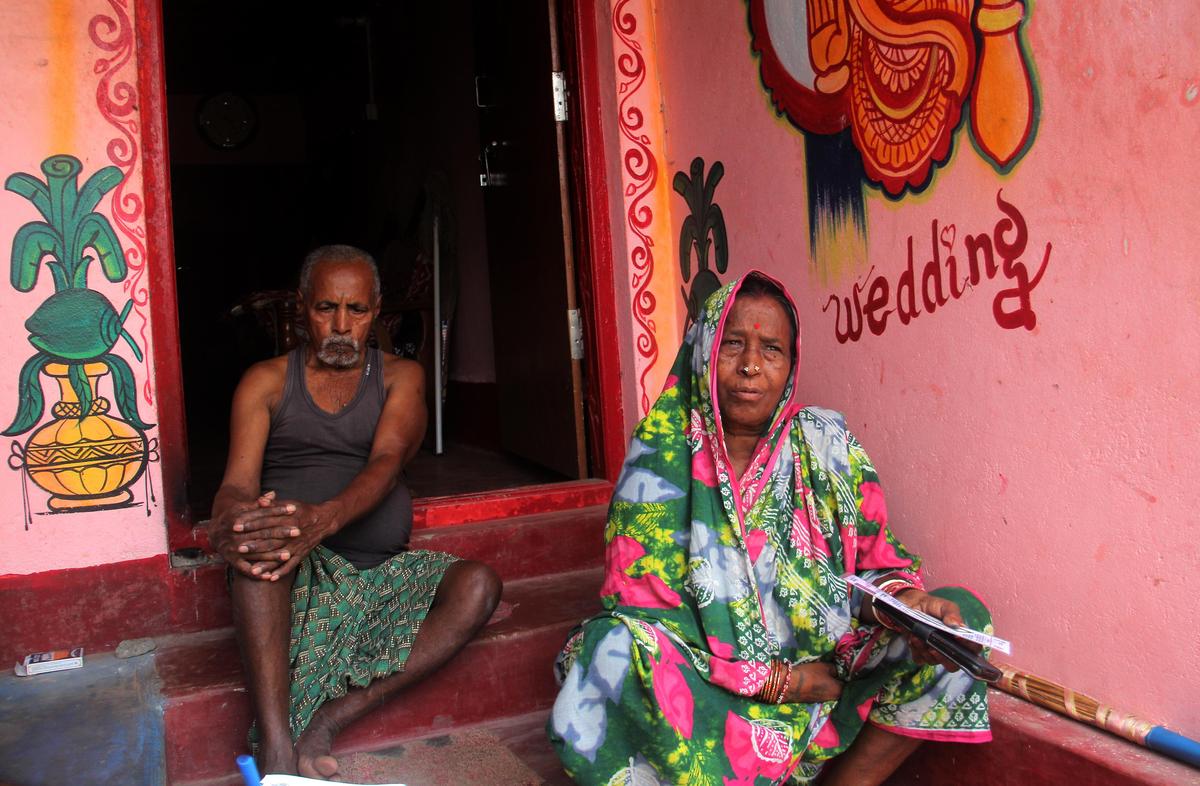
Old parents of a family are seen at their house as their two sons are stranded in Gulf region for work at Manikapur in Ganjam district of Odisha.
| Photo Credit:
Biswaranjan Rout
Exodus and life abroad
Ajay, 23, who works in Jordan, admits over a phone call that “Working hours often stretch beyond 12 or even 13 hours a day. As many as eight people squeeze into bunk beds in a 120 sq. ft. room, and the food does not always suit our taste buds. What matters most is the savings from the salary.” What they send back home can range between ₹20,000 and ₹60,000 a month.
The village sarpanch, who worked in the UAE, Malaysia, and Saudi Arabia between 2008 and 2019, took up a range of odd jobs, such as stitching, welding and gas cutting. Over time, he picked up additional skills at the workplace, enabling him to move up to better-paid assignments.
What has changed, he and others say, is that villagers now navigate life abroad with ease. There are several reasons for this loss of fear: smartphones and internet access, past experiences of early migrants, and a greater investment in education and exposure for children whose parents worked abroad, offering them a better quality of life.
140 Indians, including 60 Telugus, stuck in Bahrain airlifted to Kochi
It’s not just Manikapur village from where men migrate. Several nearby villages — Maheswapur, Kaneipur, Luchapada, Kairasi, Vikrampur, Khojapali, Bhikapada, and Chandipitha — have a large number of migrant workers employed abroad, particularly in Gulf countries. In fact, Khalikote block in Ganjam district is a hub for labour migration to foreign destinations.
Barik explains how the mechanism operates. Local agents and large consultancy firms have long been active in the area. They often place advertisements in local newspapers seeking workers, though in many cases, word of mouth plays a significant role in reaching potential candidates.
These networks do not function in isolation. Young men aspiring to work abroad begin preparing well in advance. Families arrange a consultancy fee between ₹70,000 and ₹1 lakh, which typically covers a one-way air ticket and documentation costs. Prospective migrants are usually expected to possess some form of skill certification, either acquired from formal institutions or informal training setups, making the migration process easier.
Most jobs are in the semi-skilled labour categories: stitching, construction assistance, security work, and industrial labour.
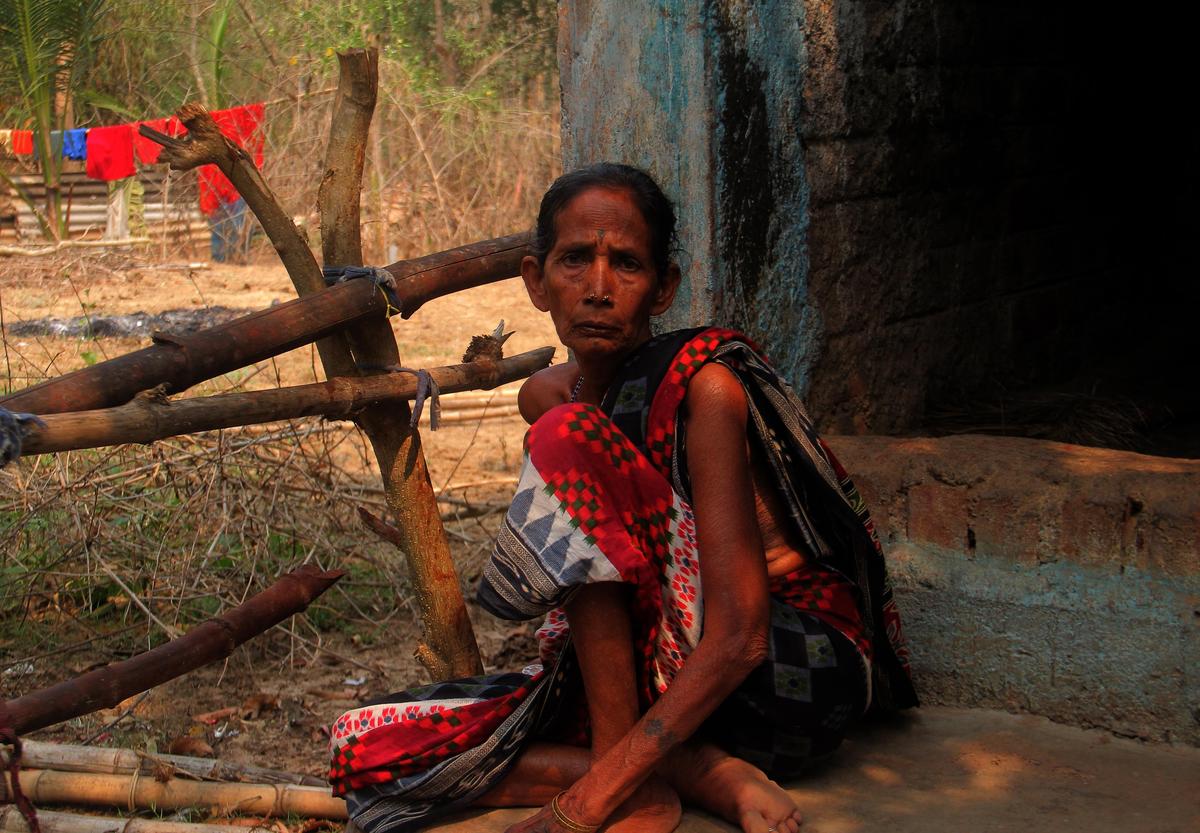
A grandmother is tense because her grandson has been working in Manikapur, a Gulf nation in the Ganjam district of Odisha.
| Photo Credit:
Biswaranjan Rout
Social mobility and marriage
In Odisha, the aspiration to earn a respectable income abroad is driven by two dominant social factors: building concrete houses in the village to impress and financing expensive marriages for daughters.
Single-storey, 2- to 3-room dwellings are common across rural Odisha. Manikapur, however, presents a contrast. Many houses have been converted into double-storey concrete structures. Steel doors and tiled façades reflect the villagers’ eagerness to invest heavily in homes that stand out from their neighbours.

While family members send remittances from Gulf countries, those left behind oversee the construction of houses. Once a concrete house is completed, other priorities gradually follow.
Marriages place an additional financial burden on families. In Manikapur, dowry (often referred to as cash gifts) typically ranges from ₹1 lakh to ₹5 lakh. Besides cash, gold ornaments, furniture, utensils, quintals of paddy and clothes for relatives are considered essential components of wedding arrangements. A large community feast is also an indispensable part of marriages in this region.
When a government team visited the village to inquire about migrant workers, 65-year-old Mukta Gouda rushed forward with a flurry of questions. She was anxious to know how the ongoing crisis abroad would affect her two sons (one working in Dubai and the other in Russia) and her grandson, who is also in Dubai.
“Had there been robust employment opportunities here, we would not have sent our men abroad. Apart from meeting daily needs, social obligations demand huge expenses. Nearly two and a half decades ago, I had spent ₹7 lakh and ₹9 lakh on the marriages of my two daughters,” Gouda recalls, adding that repaying the borrowed money had not been easy.
A survey which has been initiated by Aide-et-Action, an international non-profit organisation, to assess the extent of migration in Manikapur village, has found that 62 members from 61 families enumerated so far are working in other countries.
Also read | The Iran war and the uncertain future of the expats
On the edge
Many villagers who migrate overseas are often unprepared for unforeseen events such as the conflicts that periodically erupt across West Asia.
“The district administration should be kept informed whenever someone migrates abroad so that, in the event of a crisis, the State government can respond effectively,” says Jyoti Prakash Brahma, senior manager with Aide-et-Action, which works on migration issues.
According to Brahma, most migrants come from marginal farming families and lack stable sources of income. “The government has introduced several livelihood programmes that people could explore before deciding to migrate abroad,” he says.
The issues of migrants’ safety in Gulf countries began to echo in political circles when the war broke out. “I can feel the fear and anxiety of the millions of Odias trapped in the midst of the horrific war in the Middle East. From labourers to students, professionals, tourists, and travellers, they are all extremely terrified. Even their families and loved ones back in Odisha are anxiously awaiting their return,” former Chief Minister Naveen Patnaik wrote on social media platform X. Patnaik pointed out that air routes were closed, flights were being cancelled, and borders shut.
From conversations with family members and those who are stranded in war-hit Gulf countries, Manikapur’s men are unlikely to return soon. “Migrant workers often deposit their passports with their employers. If they wish to return home, it requires a lot of persuasion of employers to agree to their request,” says the village sarpanch Barik, from his experience. Moreover, migrant workers do not always have readily available money to fly back home. Chief Minister Mohan Charan Majhi has expressed concern over reports about several Odia migrant workers stranded in West Asian countries. He has directed the Chief Secretary to monitor the situation closely.
So far, the Odisha Parivar Directorate, which was set up two years ago as a one-stop point of contact for migrants in distress, has received nearly 200 telephone calls from people in the Gulf. A nodal officer has been appointed to coordinate with the Ministry of External Affairs and facilitate the safe return of migrants.
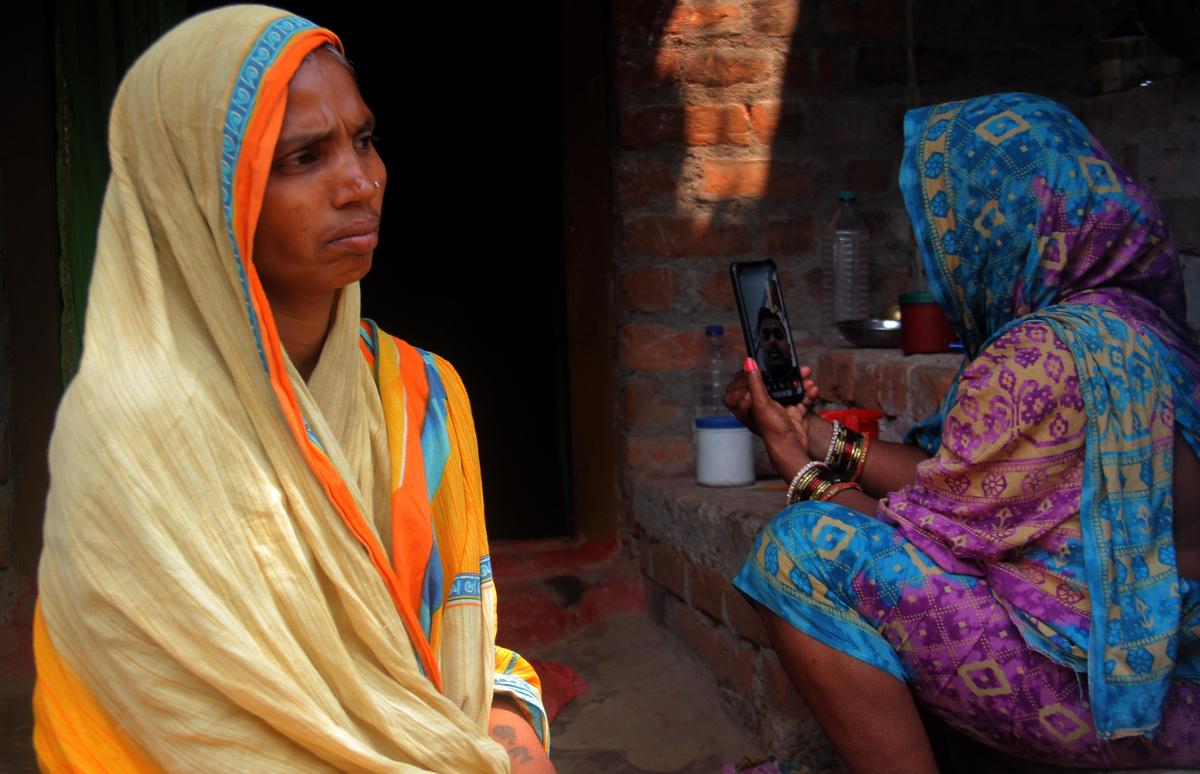
A woman takes a video call with her son, who is going to work in the Gulf region from their native village, Manikapur, in Ganjam district, Odisha.
| Photo Credit:
Biswaranjan Rout
Those left behind
In their effort to maximise savings for their households, many workers return home only every two or three years.
Young wives often wait for years to see their husbands again. In their absence, the responsibility of managing the children’s education, caring for ageing in-laws, and accessing government welfare schemes falls squarely on their shoulders. For many children, years pass without seeing their fathers.
A villager, requesting anonymity, says prolonged separation sometimes strains family relationships and leads to discord among those left behind.
“Women hardly have a place to share their worries. In the absence of my husband, it is difficult to cope with the emotional and social vacuum. Even visiting my parents to ease the stress is not always possible, because the male members there too remain away for work,” says Sarita (name changed to protect privacy), who got married last year.
In Paika Kaneipur, another nearby village, Surjya Muduli, 45, is distraught. While her husband works in Saudi Arabia, her son is employed in Jordan. “Women like us learn to support each other during crises at home,” she says.
Speaking from Saudi Arabia over a phone call, Surjya’s husband Akshaya Muduli says, “Who in the world would want to live away from their family? I worked in different parts of India, but the earnings were never enough to meet my needs. Finally, I had to move to Saudi Arabia.”
satyasundar.b@thehindu.co.in
Edited by Sunalini Mathew