


Engineers studying drone combat at one of China’s top military-linked universities needed a way to simulate clashes between drone swarms in real time. They turned to nature for inspiration.


Observing how hawks select prey, they trained defensive drones to single out and destroy the most vulnerable enemy aircraft. On the other side, the attacking drones were taught how to dodge the hawk-trained defenders based on the behavior of doves. In a five-on-five test, the hawks destroyed all the doves in 5.3 seconds.
That research earned the engineers a patent in April 2024—one of hundreds granted in recent years to Chinese defense companies and universities affiliated with the military for advances in swarm intelligence.
In the artificial intelligence Cold War emerging between the U.S. and China, military use of the technology has quickly become one of the hottest areas of competition. It’s also one of the most hazardous, with the desire to gain an edge putting pressure on commanders to turn over more and more warfighting power to machines.
Patent filings, government procurement tenders and research papers reviewed by The Wall Street Journal reveal that China’s military, the People’s Liberation Army, is intensely focused on harnessing AI to deploy swarms of drones, robot dogs and other autonomous systems. The idea is that they could overwhelm enemies or erect impenetrable defenses against threats with minimal human input.
The AI era will usher in a new style of warfighting “driven by algorithms, with unmanned systems as the main fighting force and swarm operations as the primary mode of combat,” a group of Chinese military theorists wrote in October 2024. They likened AI’s potential to transform the military to gunpowder, a technology invented in China but more effectively weaponized, many in China believe, by others.
Drones, for their part, have emerged as key weapons on the battlefields of Ukraine, where strategies and technology for their use have developed quickly under the pressure of real fighting.
Drone swarms can be used as decoys that can force an enemy to burn through munitions, as spies and as devastating weapons that can take out enemy soldiers and tanks in suicide missions.
Marrying AI with robots allows China to exploit its advantage in hardware, with Chinese factories already capable of pumping out a million or more cheap, capable drones every year—something the U.S. hasn’t been able to do. With its weaker tech supply chain, the U.S. produces drones in the tens of thousands, and at prices many times higher.
Flaunting that advantage, China’s state broadcaster in 2024 released footage of Swarm 1, a truck-mounted system capable of launching as many as 48 fixed-wing drones at a time. It said multiple trucks could be used to launch swarms of up to 200 drones capable of splitting up to carry out coordinated tasks, including reconnaissance, strikes and deception.
The Jiutian, a hulking mother ship drone designed to release swarms of smaller drones, completed its maiden flight in December, according to state media. That came after the PLA displayed a pack of “robot wolves”—bulked up, weaponized versions of robot dogs—in a military parade in September. In an interview with state media, their maker, state-owned China South Industries Group, said the company is working on ways to link wolf packs with aerial swarms to create “a new model of efficient collaborative combat.”
Swarm intelligence also offers an enticing solution to a long-running concern for the PLA over the competence of rank-and-file soldiers and their commanders, who haven’t fought a war since the late 1970s.
“At a tactical level, for concrete missions, there’s a growing consensus [in Chinese military writings] that autonomous systems have the potential to perform better than humans,” said Sunny Cheung, an open-source intelligence expert at the Washington think tank Jamestown Foundation.
China’s Ministry of Defense didn’t respond to requests for comment.
The approach comes with risks for China. PLA engineers could fail to get the technology to work in a real wartime scenario, making China’s robot squadrons easy for enemies to pick off or disable. Or the AI could work too well, and make deadly decisions outside the understanding or control of human commanders. In fact, lessons from Ukraine, where signal jamming makes it increasingly difficult for human soldiers to control drones remotely, have reinforced for the PLA the value of drones that carry out orders on their own, Cheung and other military analysts say.
Robot armies
Militaries around the world are intrigued by the potential of advanced self-teaching forms of AI, like those that underpin ChatGPT, to improve everything from logistics to battlefield analysis and combat. Actual use of the technology by militaries is still in its infancy and is shrouded in secrecy.
Research papers, patent filings and military bid tenders—which Chinese government agencies make public so companies can bid to supply them—offer a glimpse into how the PLA is seeking to deploy AI.
One bid tender posted to a PLA-managed procurement platform in 2024, among many acquired by Georgetown University’s Center for Security and Emerging Technology, outlined a mobile cognitive warfare system with the ability to create AI-driven deepfake videos and broadcast them via laser onto buildings or other public landmarks.
The tender also requested robot dogs and drones for reconnaissance, along with a “consciousness intervention system” mounted on an unmanned ground vehicle to blast targets with directed sound at decibel levels nearly high enough to rupture ear drums.

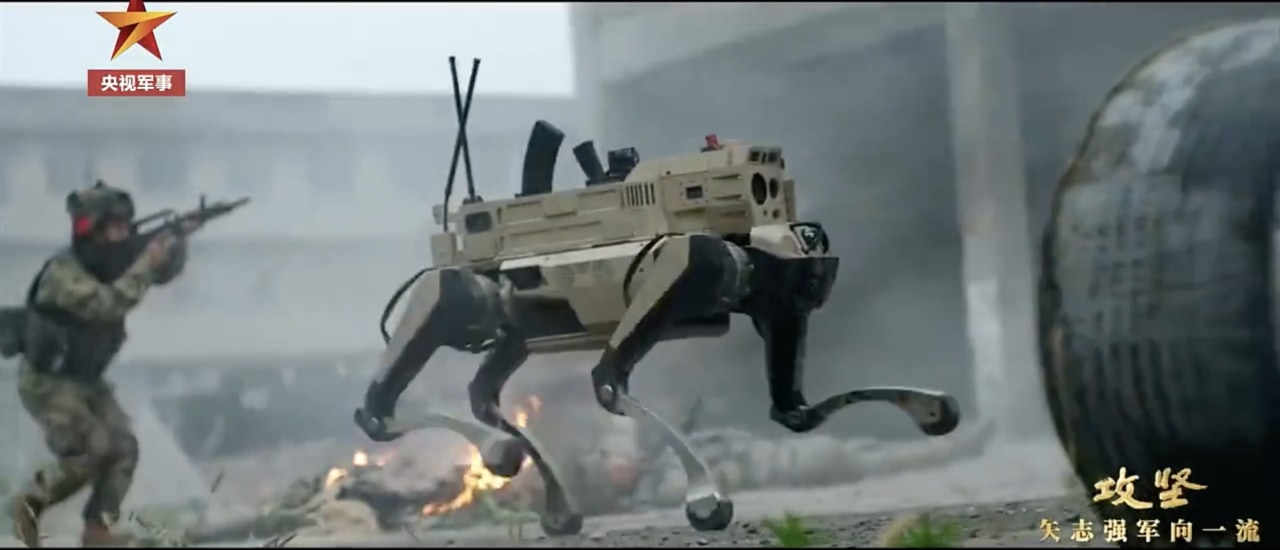
The tender for the mobile cognitive warfare unit reads like a “fever dream” of Chinese military AI ambitions, said Sam Bresnick, a research fellow at CSET. “The idea is, ‘Can some company deliver this kind of thing and then can we produce it at scale?’”
A tender being posted doesn’t necessarily mean the PLA has acquired or will ever get the system described, but it does show what sort of technologies Beijing is interested in, Bresnick added.
Competition between the American and Chinese militaries over drone swarms dates back at least a decade. In 2015, a single pilot successfully controlled 50 drones at one time in a test at the Naval Postgraduate School in California, setting a world record. A state-run Chinese defense company broke the record the next year. The pattern repeated in 2017.
Those early demonstrations were rudimentary, with the drones able to fly together at a set distance and little else. For a time, the most exciting development in the field was the advent of light shows in which hundreds of preprogrammed drones created animations or formed corporate logos in the skies above major events.
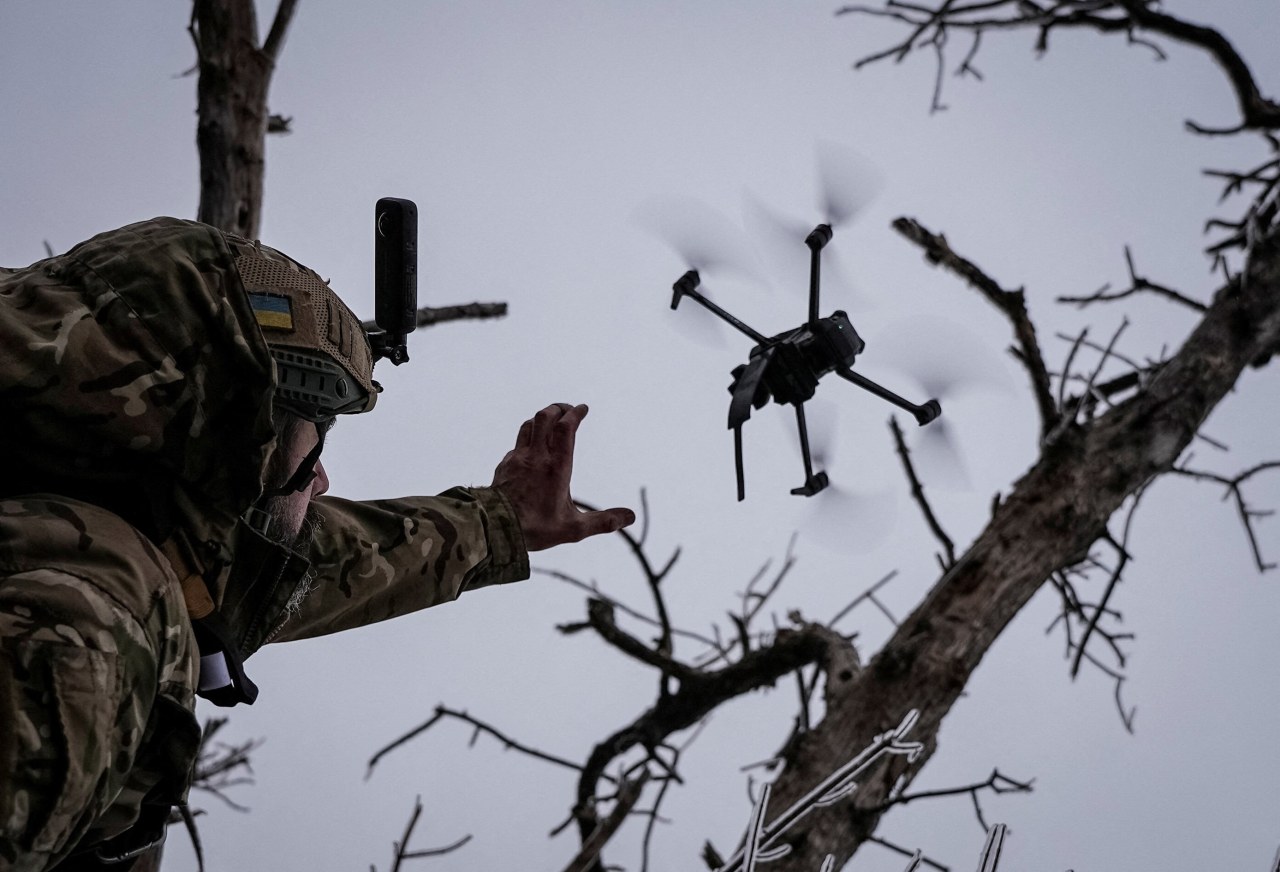
Today, drones used on the battlefield in Ukraine and Gaza are faster, more maneuverable and more robust, enabling their operators to zip through a war zone as if in a videogame. They are also developing the ability to track and destroy targets on their own.
As drones have become cheaper and more capable, sci-fi visions of AI-powered robot armies clashing on the battlefield have inched closer to reality. A recent surge of research into drone intelligence is producing a stream of new or updated algorithms, many of them modeled on the behavior of animal groups, that theoretically give large numbers of drones rules for how to act and react in concert to carry out a mission.
The trick is getting those algorithms to work on actual drones in realistic battlefield scenarios, according to Justin Bradley, an expert in aerospace engineering at North Carolina State University who specializes in autonomous systems.
“We don’t have good-enough perception on these vehicles for them to know where each other are,” Bradley said. Instead, current systems are forced to rely almost entirely on radio communication between drones that is easily disrupted by electronic warfare.
Advanced AI can mitigate that vulnerability by enabling drones to automatically track each other, as well as identify targets and spot obstacles to avoid. But finding enough data to train reliable models is difficult. So is combining a self-learning AI model with the human-designed systems that control other parts of a drone.
“You can’t just add in your own stuff and hope for it to be holistically robust,” Bradley said.

Studying animal behavior
China is pushing ahead anyway. The hawk vs. dove simulation—run by researchers at Beihang University, one of the PLA-linked schools in China known as the “Seven Sons of Defense”—reflects what American drone experts say are the strengths and weaknesses of China’s pursuit of swarm intelligence.
The research, detailed in an academic paper and a patent application, included more sophisticated modeling that reflects how drones actually fly, compared with other animal-inspired models that assume simpler styles of movement. As with a lot of Chinese work on swarm intelligence, it was a relatively minor advance that’s unlikely to turn heads in the U.S., according to Bradley, but the simulation reflects the country’s practical focus on making swarm combat actually work.
“What you can say is, ‘Hey, look, China is thinking very seriously about developing the algorithms that it can use in a tactical environment to win at a specific game,’” he said. “In this game, we’re talking about some kind of resource and aggressively defending or attacking it.”
Beihang University didn’t respond to a request for comment.
Other work by Chinese researchers takes a similar approach, tweaking algorithms based on the behavior of ants, sheep, coyotes and whales to eke out theoretical improvements in the ability of unmanned systems to collaborate.
Speaking at a drone conference in Beijing in July, the Beihang professor who led the university’s hawk-dove swarm simulation, Duan Haibin, said Chinese researchers were also trying to simulate the eyes of eagles and fruit flies in search of a solution to drones’ perception problems.
Since the start of 2022, Chinese defense contractors, military institutes and military-linked universities have published at least 930 patent filings related to swarm intelligence. There have been only around 60 such patents published in the U.S. over the same period, and at least 10 of those were filed by Chinese entities.
The discrepancy partly stems from the much heavier emphasis Chinese university science departments put on patent filings in judging academic performance. But it also reflects differences in approach, according to Stacie Pettyjohn, a senior fellow and director of the Defense Program at the Center for a New American Security.
For China, which is home to factories that pump out more than 80% of the world’s small drones, it makes more sense to pursue swarms, according to Pettyjohn. “China is very focused on figuring out ways to be able to deliver and employ a lot of smart, small drones just because that is something that is widely available to them,” she said.
China’s dominance of the drone supply chain makes it difficult for the U.S. to build its own arsenal of cheap unmanned systems, since reliance on affordable Chinese parts would make American drones vulnerable to hacking or supply disruptions.
The Pentagon is nevertheless striving to close the gap with China. It recently deployed a new long-range kamikaze drone that costs $35,000, a price point drone experts say is surprisingly affordable.
Western drone makers are also experimenting with swarms. Auterion, a startup with offices in Virginia and Munich, demonstrated its swarm technology on quadcopter drones during U.S. Army training exercises in Hawaii in November. At one point, the company launched seven drones simultaneously, with two peeling off in a simulated suicide strike using a technology known as pixel-lock to home in automatically on their targets.
California-based Anduril Industries says its autonomy software, Lattice, enables swarm coordination, though Navy tests of that system in May ended in failure.

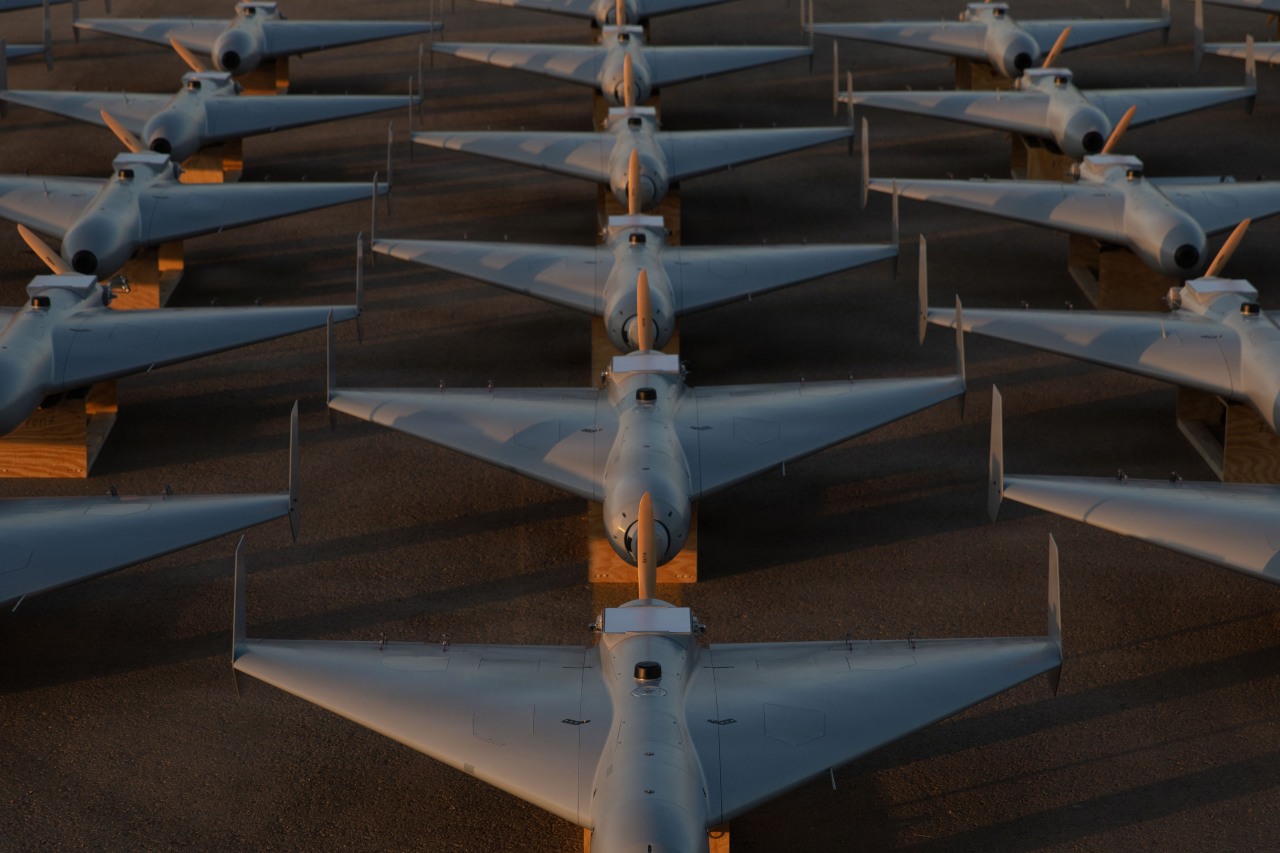
Despite those efforts, Pettyjohn said, the U.S. is more heavily focused on improving the autonomy of individual drones that can work in a team with human soldiers and pilots, which plays to strengths of the American military’s decentralized combat units.
Control from the top
Developing the ability to deploy platoons of robots that can carry out orders without hesitating also speaks to skepticism in Beijing about the reliability of PLA mission commanders.
Chinese leader Xi Jinping has for a decade lamented what he calls the “five incapables,” a reference to commanders who can’t assess a situation, can’t make operational decisions, can’t grasp superiors’ intentions, can’t deploy troops effectively and can’t handle unexpected situations.
Some military analysts attribute that lack of trust to China’s rigidly top-down military command structure, which diverges sharply from the U.S. approach of training combat units and individual soldiers to make decisions on their own when necessary. The Communist Party’s preference for centralized control makes AI all the more appealing as a way to engineer military operations from Beijing, they say.
The expectation of Chinese military theorists is that drone swarms will help the PLA overcome its lack of experience in combat by overwhelming even the most competent human commanders of an opponent.
Procurement documents posted to PLA-controlled platforms show an interest in bringing AI-driven drone swarms out of the lab. One bid tender posted in April 2024 sought to rent a drone equipped with radar-based mapping sensors to collect real-world training data for AI models that swarms can use to identify targets.
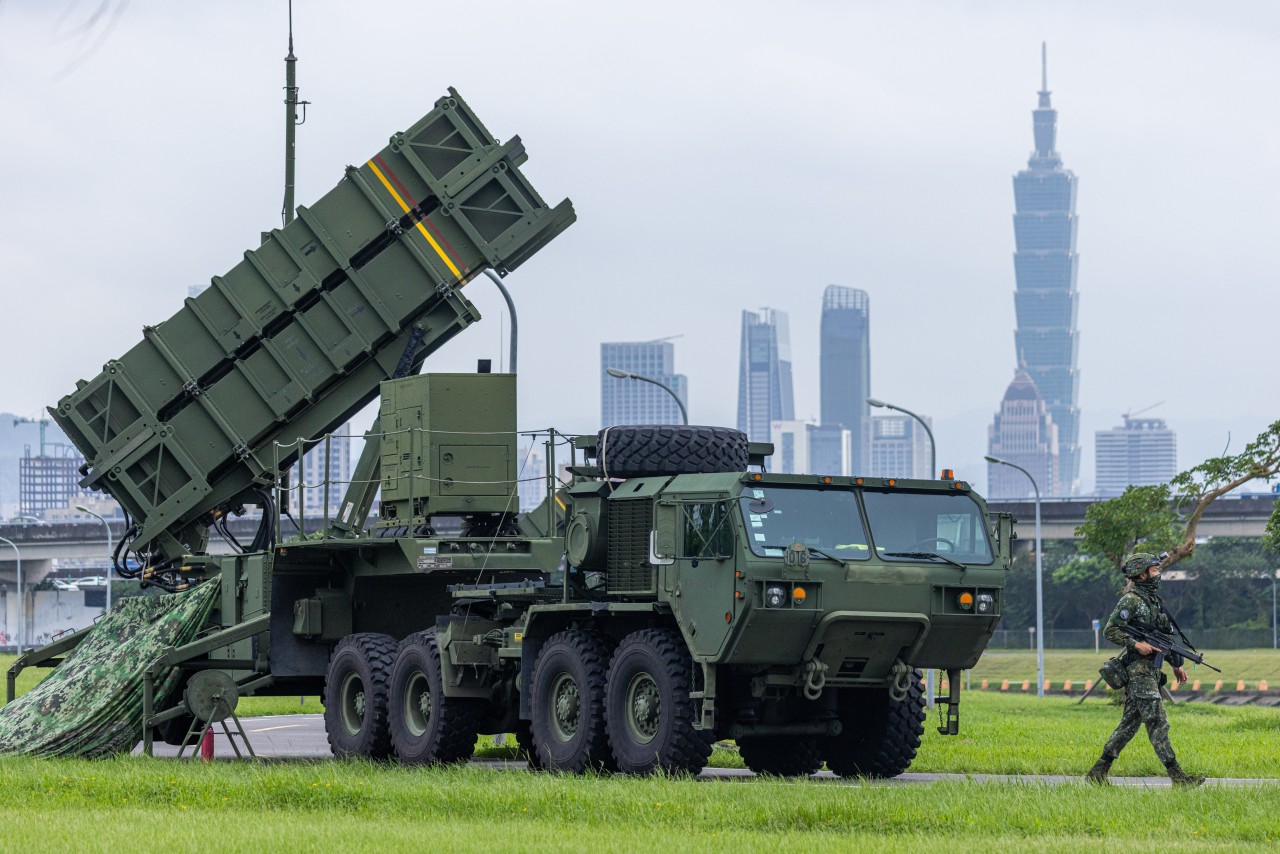
Assuming the PLA figures out the technology, one scenario in which Chinese drone swarms are most likely to be deployed is in a conflict over Taiwan, the self-ruled island democracy China claims as its territory.
After an initial rocket attack, the PLA could send swarms from 50 miles away to loiter in the airspace over the island and search for any remaining Taiwanese jet fighters or air defenses, according to Pettyjohn. They could then attack targets directly, or mark them for long-range missile attacks.
“You could very easily have this dense amount of firepower up there just constantly scanning and searching and making it very hard for Taiwan to conduct defensive operations,” she said.
Chinese research papers, patent applications and procurement documents also demonstrate a strong interest in counter-swarm technology—an indication Beijing is thinking about defense in addition to offense.

For militaries, the most fundamental concerns about AI stem from its mysterious decision-making processes and propensity to hallucinate.
Not only might autonomous systems make deadly mistakes, but the opacity of their calculations could provide cover for bad human decisions, Zhu Qichao, a technology strategist at China’s National Defense University, wrote last year in an essay for the state-run magazine People’s Tribune.
“Once an artificial intelligence weapon system produces safety hazards, the ‘algorithm black box’ may become a rationalized excuse for the relevant responsible parties to shirk responsibility,” he wrote.
Governments, tech watchdogs and some of the people who build AI systems have called for global rules restraining use of the technology in warfare to avoid the various nightmare scenarios associated with automated killing machines.
Zhou Bo, a retired senior colonel in the PLA, said both China and the U.S. will want to know what AI can actually do on the battlefield before agreeing to any limits. “AI’s military applications are burgeoning, so its consequences have yet to be fully discovered,” he said.
Write to Josh Chin at Josh.Chin@wsj.com